Rome is beautiful at noon, but it is unforgettable at dusk. As the harsh midday glare softens, the city's travertine and brick begin to glow amber, the day-tour buses empty out, and the piazzas fill with Romans starting their evening passeggiata. For a first-time visitor, planning even one or two evenings around golden hour and the after-dark lighting is the single easiest way to fall in love with the Eternal City. This guide covers where to be as the sun drops, which monuments are worth seeing once they light up, and how to turn an ordinary night into the highlight of your trip.
The logic is simple. Rome's most photographed landmarks are mobbed in daylight and serene after dinner, the temperature in summer finally becomes bearable, and the warm artificial lighting flatters the architecture in a way that the flat afternoon sun never does. Below are the viewpoints, walks, and rituals that make a Roman evening, organized so you can build them into whatever days you already have planned.
Golden hour: where to catch the light
Rome rewards anyone who climbs a little. The Pincian Terrace above Piazza del Popolo, at the edge of the Borghese gardens, is the classic sunset perch, looking west across a sea of domes toward St. Peter's. The Gianicolo (Janiculum) Hill above Trastevere offers an even wider panorama and is quieter, while the Orange Garden (Giardino degli Aranci) on the Aventine frames the dome of St. Peter's between umbrella pines. Arrive 30 to 45 minutes before official sunset to claim a spot and watch the color change; the light show is gradual and worth the wait.
If you would rather have the timing handled and the history narrated for you, the Rome Sunset Tour is built entirely around this rhythm, trading the brutal afternoon queues for soft evening light over the city's great squares. It is the most direct way to experience golden hour without juggling a map, and a guide who knows exactly when and where the light lands removes all the guesswork.
Monuments after dark: when the city lights up
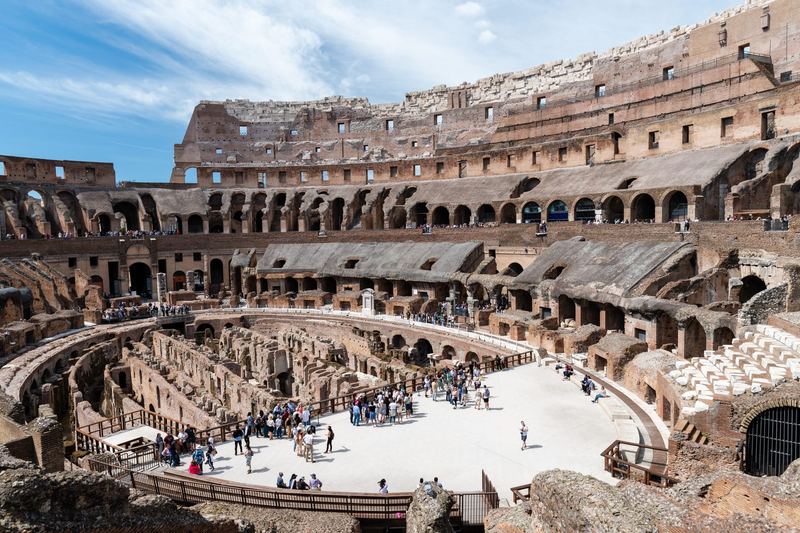
Several of Rome's headliners are arguably better at night, viewed from the outside, once the floodlights switch on. The Colosseum, lit from within and below, is dramatic from the surrounding streets and the Oppian Hill, and the area is calm compared with the daytime crush. The Roman Forum and the Imperial Fora glow along Via dei Fori Imperiali after sunset, a free and atmospheric stroll. Castel Sant'Angelo, mirrored in the Tiber and connected to the city by its statue-lined bridge, is one of the most romantic night views in Rome.
Daytime entry to these sites is still essential to understand them, of course. Pair an evening exterior walk with a proper guided visit during opening hours, whether that is a Walking Tour of the Colosseum, Roman Forum & Palatine Hill or, for the riverside fortress, a Skip the Line: Castel Sant'Angelo Private Tour. Seeing a monument lit at night after you have learned its story by day is a genuinely different, deeper pleasure.
The evening piazza crawl
Some of Rome's finest spaces have no opening hours at all, which makes them perfect for an after-dinner wander. Piazza Navona, with its Bernini fountains, is liveliest in the evening. The Pantheon's portico is floodlit and far less crowded after dark. The Trevi Fountain is spectacular when illuminated, though it stays busy late, so aim for very late evening if you want a clearer view of the cascade. The Spanish Steps, gently lit, draw an easy crowd of people simply enjoying the night air.
Stringing these together on foot is the quintessential Roman evening, and they sit close enough to link in a single relaxed loop. For a guided version that connects the great squares and their fountains with the stories behind the sculpture, the Private Walking Tour of the Squares & Fountains in Rome works beautifully in the cooler hours. Our Trevi Fountain and Spanish Steps guide has more on timing your visit to dodge the worst of the daytime crowds.
Dinner, aperitivo, and the Roman night
An Italian evening is not a sprint to a restaurant; it is a sequence. Begin with aperitivo, a pre-dinner drink with small bites, around 6:30 to 8 p.m., then settle into a long dinner that Romans rarely start before 8:30. Trastevere, with its cobbled lanes and ivy-draped trattorias, is the postcard neighborhood for this, while the Jewish Ghetto next door is famous for its fried artichokes and a quieter, equally storied atmosphere. Both are at their best after dark.
To eat your way through these two districts with someone who knows which doors to open, consider the Food & Wine Tour: Ghetto & Trastevere Culinary Adventure. If you simply want to understand Roman cooking before you choose your own table, our what to eat in Rome food guide breaks down the dishes and neighborhoods worth seeking out. Either way, build in time to linger; rushing a Roman dinner defeats the entire purpose.
Seasonal timing: when sunset actually happens
The shape of a Roman evening shifts dramatically with the calendar, so plan accordingly. In the depths of winter the sun sets before 5 p.m., which means golden hour arrives in time for an early aperitivo and the monuments are lit well before dinner, ideal for short, atmospheric outings. In high summer the sun lingers past 8:30 p.m. and the long, warm dusk is the best part of the day, the moment to be outdoors after a midday rest. Spring and fall split the difference with comfortable temperatures and a sunset that conveniently lands right around dinnertime.
Whenever you visit, check the day's sunset time and reverse-engineer your evening from it. For a fuller seasonal breakdown, our best time to visit Rome guide covers the trade-offs in weather, crowds, and daylight month by month, which directly shapes how you should structure your nights.
How to build an evening into your trip
You do not need a dedicated night plan to enjoy Rome after dark; you need to protect the right hours. Front-load your ticketed, indoor sights, the Vatican Museums, the Borghese Gallery, the Colosseum interior, into the morning and early afternoon, then keep your evenings loose for viewpoints, piazzas, and dinner. If you only have time for one curated evening, make it golden hour somewhere high followed by a slow walk past the floodlit fountains.
When you are ready to lock in the guided pieces, browse the full range on our tours page and slot a sunset or evening walk around the monuments you most want to see lit up. Rome gives its best self to travelers who slow down after the sun drops, so give the city at least one unhurried night and let the lights do the rest.
Frequently asked questions
What is the best place to watch the sunset in Rome?+
Which Rome monuments are best seen at night?+
What time does the sun set in Rome?+
When do Romans eat dinner?+
Is it safe to walk around Rome at night?+
Is a sunset or evening tour worth it in Rome?+
Book These Tours
See Rome & the Vatican with a local guide
Skip-the-line Vatican & Colosseum tours, private Rome walks, day trips, and airport transfers — book online with instant confirmation.
Browse all Rome & Vatican tours →